

Which water heater to choose: a guide to selecting the right model
Which water heater to choose: guide to selecting the right model
If you are wondering “which water heater should I choose?”, the right answer is not a single product, but a method. To make the right choice, you need to consider three factors together: the available system, your actual hot water requirements and installation constraints. From there, you can determine whether an electric storage water heater, an instantaneous gas water heater or a heat pump solution is the best option for you.
This guide helps you choose in a practical and verifiable way.
Which water heater to choose based on your system
If you only have an electrical system or want a simple solution
As a rule, choose an electric storage water heater. It is the most straightforward type to install: it heats a quantity of water and keeps it ready for use. Sizing is mainly based on capacity in litres and the installation position.
On StorePST you can find Midea vertical water heaters with capacities of 30, 50, 80 and 100 litres and a power output of 1500 W, Midea 10-litre models for over-sink or under-sink installation, Haier 30-litre under-sink water heaters and wall-mounted single-phase models with capacities of 50, 80 and 100 litres. More advanced slim solutions are also available, such as Ariston Velis Pro and Ariston Velis Pro Dry Wi-Fi in 50, 80 and 100-litre sizes, as well as Ariston Andris RS for compact installations close to the point of use.
If you have gas and want continuous hot water without a storage tank
Consider an instantaneous gas water heater. This solution produces hot water when you open the tap and is sized mainly according to litres per minute. It is often the most suitable choice when several showers are taken one after another and you want to reduce the risk of running out of hot water, provided that the system and flue gas exhaust are compatible.
On StorePST you can find Vaillant TurboMAG Plus with flow rates of 12, 15 and 17 litres per minute in a room-sealed configuration and low NOx technology, Vaillant AtmoMAG Mini with a flow rate of 14 litres per minute and open-flue configuration, Vaillant OutsideMAG 15 for outdoor installation, Rinnai ONE 11 and Rinnai Infinity 14 and 17 for indoor or outdoor installation, as well as Hermann Saunier Duval Opalia F 15/1 with a flow rate of 15 litres per minute.
If you want to maximise energy efficiency
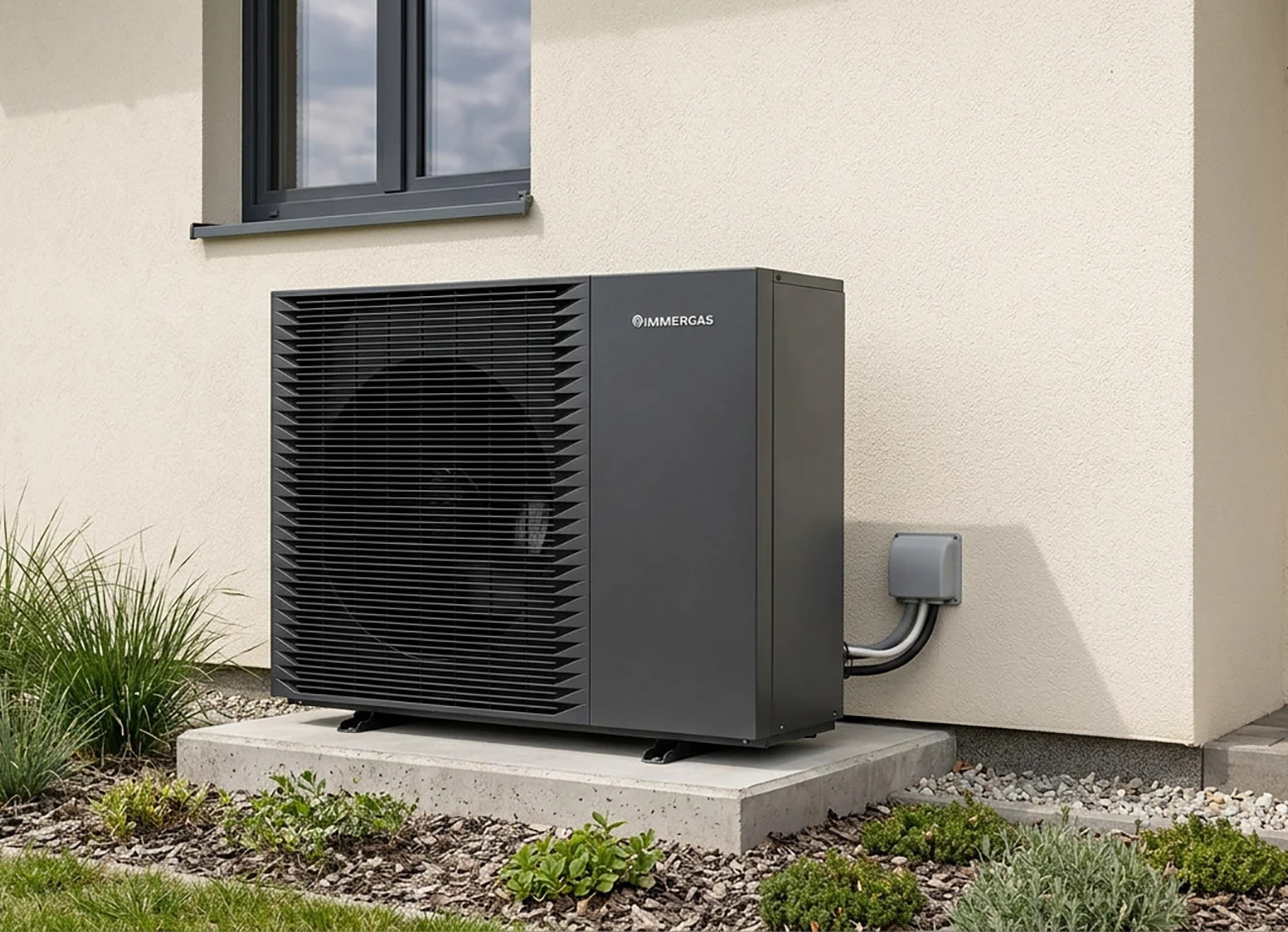
Consider a heat pump water heater, a solution that requires more attention to space and installation but can reduce energy consumption over the medium term. StorePST offers the Calypso Split 150-litre WiFi model in energy class A+.
Electric water heater: how many litres to choose
When the question is which water heater to choose, in the case of electric storage models the key point is how many litres you need. The practical rule is to size the unit based on simultaneous consumption and the number of consecutive showers, not just the number of people.
For kitchens, secondary bathrooms and small uses close to the point of use, typical sizes range from 10 to 30 litres. On StorePST you can find Midea 10-litre over-sink and under-sink models, Ariston Andris RS in compact sizes and Haier 30-litre under-sink models.
For one shower with moderate use, 30–50 litres may be sufficient, such as Midea 30 or 50-litre models or a Haier 50-litre wall-mounted model. For a couple with normal habits, 50–80 litres is the most common range. If showers are taken consecutively and you want more autonomy, 80 litres is often more convenient. When the goal is to have more capacity or there are three or more people with intensive usage patterns, 100 litres is a common size, with options such as Midea 100 litres, Haier 100 litres and Ariston Velis Pro 100.
If the hot water often runs out, in most cases this is not a fault with the water heater but rather inadequate sizing for the actual usage profile.
Instantaneous gas water heater: which L/min flow rate to choose
When choosing an instantaneous gas water heater, the flow rate in litres per minute is a key indicator. Simply put, a higher flow rate means more capacity when demand is greater or when you want more stable performance during a shower.
The category includes typical flow rates such as 11, 12, 14, 15 and 17 litres per minute. A size such as 11 litres per minute is suitable for limited requirements, while 14–15 litres per minute is a very common choice for residential use and comfortable showers. Models rated at 17 litres per minute are often considered when greater capacity is required.
The effective flow rate also depends on the temperature of the incoming water and the desired output temperature. For a technically correct recommendation, it is advisable to assess the points of use, simultaneous demand and actual operating conditions.
Room-sealed or open-flue: which one should you choose
The choice between a room-sealed and an open-flue configuration concerns how the gas water heater manages combustion air and flue gas exhaust. These configurations have different requirements and should not be chosen solely on the basis of price or immediate availability.
On StorePST you can find clear examples: Vaillant TurboMAG Plus as a room-sealed option and Vaillant AtmoMAG Mini as an open-flue option. In the case of replacement, before changing configuration it is advisable to check the existing type and system compatibility, because a correct replacement reduces installation time, unexpected issues and disputes.
Indoor or outdoor: when to choose an outdoor water heater
An outdoor water heater is useful when indoor space is limited or when the best solution is to position the appliance outside, while complying with the specified installation conditions. The category includes Vaillant OutsideMAG 15 and Rinnai models designed for indoor or outdoor installation.
How much does a water heater consume: the factors that really matter
The question of energy consumption is one of the most common when looking for a water heater.
There are key factors that explain why two homes with the same water heater can have different energy consumption levels.
For an electric storage water heater, the main factors include capacity in litres, the set temperature, heat loss, distance from the points of use, usage habits and the presence of limescale, which can reduce heat transfer efficiency. An oversized unit, if managed poorly, can increase heat loss.
For an instantaneous gas water heater, the main factors include the required flow rate, burner modulation, incoming water temperature and the set temperature. Correct sizing helps ensure stability and comfort, while using the unit beyond its effective flow rate can lead to temperature fluctuations.
For a heat pump, the main factors include installation conditions, usage and management. It is a solution that often makes sense when considering energy efficiency over the medium term and when suitable installation conditions are available.
Accessories and flue gas exhaust: what to consider before purchasing
Choosing the appliance alone is not enough for a complete solution. With gas models in particular, it is important to consider the flue gas exhaust and accessories, because they determine whether the appliance can be installed correctly and without improvised adaptations.
On StorePST you can find coaxial flue kits and air/flue gas or flue gas splitters designed for Vaillant, Rinnai and Hermann Saunier Duval, as well as accessories such as insulating sleeves. Assessing these components during the selection stage helps make installation faster and technically cleaner.
Quick answers: which water heater to choose in the most common situations
Which water heater to choose for 2 people
In many homes, a 50 or 80-litre storage water heater is suitable. If showers are often taken consecutively and you want greater continuity, an instantaneous gas water heater may be more appropriate, provided that the system is compatible.
Is a 50 or 80-litre water heater better
A 50-litre model is suitable for moderate use and showers that are not taken one after another. An 80-litre model offers greater autonomy and more capacity for more intensive daily routines.
Which water heater to choose for the kitchen
For the kitchen and small uses close to the point of use, 10–30-litre over-sink or under-sink models are generally preferable because they reduce waiting times and limit waste.
Which water heater to choose for consecutive showers
If you want to reduce the risk of running out of hot water, you can increase the storage capacity to 80–100 litres or consider an instantaneous gas water heater correctly sized in litres per minute.
Which 11, 14, 15 or 17-litre-per-minute gas water heater to choose
A higher flow rate provides greater capacity and stability, but it should be sized according to the number of outlets and simultaneous demand. If in doubt, it is useful to start from the actual points of use and the temperature of the incoming water.
Which water heater to choose if I have limited space
For electric systems, compact solutions close to the point of use or slim models such as ultra-thin ranges can help. For gas systems, in some situations an outdoor model can be considered, if conditions allow.
Conclusion: how to choose the right water heater
If you are wondering which water heater to choose, the best decision comes from three checks. First, determine whether you need an electric storage model, an instantaneous gas model or a heat pump based on your system. Then size it correctly: litres for storage models and litres per minute for instantaneous models. Finally, consider installation and accessories, especially flue gas exhaust and indoor or outdoor configuration.
To compare sizes, configurations and availability, visit the Water Heaters category on StorePST and select the type that best suits your needs.
In Same Category
- New monobloc heat pumps on StorePST: faster to integrate, more straightforward to install
- NEW CONDENSING BOILERS: VAILLANT ECOTEC PLUS, ECOVIT VKK AND IMMERGAS VICTRIX SUPERIOR, VICTRIX ZEUS
- New Air Conditioner Deals at StorePST: Why Buying in September Pays Off
- Boiler servicing: how often it is mandatory, what it includes, and how much it costs
- Portable air conditioner: what it is, how it works, and when it's best